Community Guide
The Willamette Valley
Wine country, farmland, small towns, and one of the most livable regions in the Pacific Northwest.
The Willamette Valley stretches from Portland south through Salem to Eugene, a 150-mile corridor that's home to 70% of Oregon's population, some of the world's most acclaimed Pinot Noir vineyards, and a collection of small towns and communities that offer a lifestyle increasingly hard to find: authentic, grounded, and connected to the land.
70% of Oregon
Lives in the Willamette Valley
170+ commodities
One of the most diverse ag regions in the U.S.
11 AVAs
World-class wine appellations
Wide price range
From starter homes to estate vineyards
The Lifestyle
What makes the Willamette Valley different
People don't move to the Willamette Valley because they have to, they move because they want a different kind of life. The pace is different here. The priorities are different. The relationship between people and the land is different.
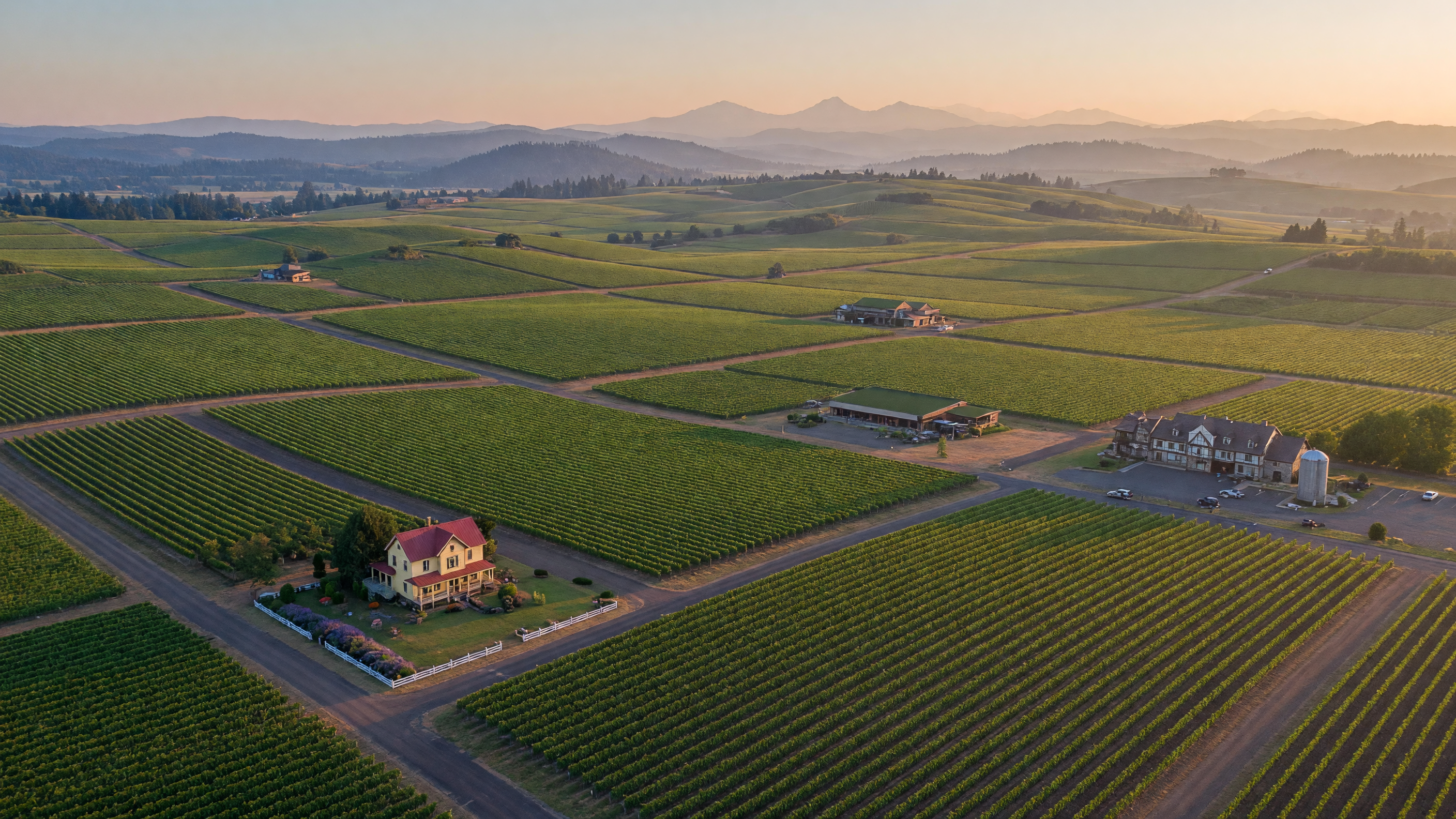
The wine country is real. This isn't a marketing label, the Willamette Valley is one of the premier wine-producing regions in the world, with 11 nested AVAs and more than 900 wineries. The Dundee Hills, Eola-Amity Hills, and Ribbon Ridge produce Pinot Noir that competes with Burgundy at global auctions. But beyond the accolades, the wine culture here is lived-in, tasting rooms are neighbors, not tourist attractions, and the rhythm of the valley follows the growing season.
The agricultural charm is genuine. Beyond wine, the valley produces hazelnuts, berries, grass seed, nursery stock, and more than 170 agricultural commodities. You'll drive past hazelnut orchards on the way to school. Farmers' markets in McMinnville, Dundee, and Silverton aren't curated experiences - they're how people actually shop.
The small-town feel is the draw. McMinnville has one of the best main streets in Oregon, independent restaurants, local shops, a historic theater, and the kind of community personality that can't be manufactured. Newberg, Dundee, Silverton, and Philomath each offer their own version of what it means to live somewhere that feels like a real community, not just a ZIP code.
And the Cascade foothills frame everything - views of Mount Hood and Mount Jefferson from vineyard roads, trail access to national forest land, and the kind of Pacific Northwest scenery that reminds you why you moved here in the first place.
Why people choose the valley
- World-class wine country at your doorstep
- Genuine small-town communities with character
- Agricultural landscape and farm-to-table culture
- Cascade Mountain views and outdoor access
- More affordable than Portland, with more space
Local favorites
- Dobbes Family Winery, Dundee Hills Pinot Noir
- Crescent Cafe, McMinnville's neighborhood gem
- Furioso Vineyards, Dundee tasting room & views
- McMinnville Farmers' Market, Thursday evenings, May–Oct
Communities
Find your corner of the valley
From wine country towns to college communities to the state capital, each Willamette Valley community offers its own balance of lifestyle, value, and character.
McMinnville
The heart of Oregon wine country, a genuine small-town main street with independent shops, restaurants, and an annual UFO Festival that captures the community's quirky personality. Yamhill County's largest city and a lifestyle destination in its own right.
Newberg / Dundee
The gateway to the Dundee Hills, where some of Oregon's most acclaimed Pinot Noir vineyards sit on golden hillsides above the town. A small-town feel with world-class wine at your doorstep.
Salem
Oregon's state capital anchors the mid-valley, a real city with 180,000+ residents, outstanding parks (including 1,200-acre Minto-Brown Island Park), growing food and drink scenes, and some of the best school districts in the valley.
Silverton
A small town known for its arts community, the Oregon Garden, and a walkable downtown that feels like a step back in time. Just 20 minutes south of Salem with a strong sense of local identity.
Corvallis / Philomath
Home to Oregon State University, Corvallis offers a college-town energy with a strong local economy, extensive bike paths, and access to both the valley floor and the Cascade foothills.
The Wine Country Corridor
The ribbon of vineyards, tasting rooms, and boutique inns stretching from the Dundee Hills through the Eola-Amity Hills to the Van Duzer corridor, one of the most celebrated wine regions in the United States.
The Wine Country
What it's actually like to live in wine country
Living in the Willamette Valley wine country isn't like visiting it. The tourists come on weekends. You live here Tuesday through Sunday, and the valley has a rhythm that's quieter and more grounded than the tasting-room brochures suggest.
The Dundee Hills are where many of Oregon's most iconic vineyards sit, rolling golden hills with red Jory volcanic soil, tasting rooms tucked into hillside estates, and views that stretch across the valley floor to the Cascades. Newberg and Dundee are small towns with real identity, where you'll see the same people at the farmers' market and the coffee shop every week.
McMinnville has evolved into one of Oregon's most desirable small towns, a downtown that's genuinely walkable, a food scene that attracts chefs from across the state, and a community that celebrates its agricultural roots without taking itself too seriously. The annual UFO Festival is a perfect example: thousands of people in alien costumes on Main Street, and it's completely normal.
For homebuyers, the wine country corridor offers everything from modest farmhouses to custom hillside estates with vineyard views. The lifestyle appeal is real, but the practical details matter too, road access in winter, well water versus municipal, the economics of hobby vineyards, and the nuances of property in agricultural zones. That's where having an agent who knows the area makes the difference.
Common questions I hear
- Can I afford wine country living?
- What's it like commuting from McMinnville or Dundee?
- Should I buy a property with a vineyard?
- How do I handle agricultural zoning and land use?
- Is the valley a good place to retire?
The Market
What to know about buying in the Willamette Valley
The Willamette Valley's real estate market is really a collection of markets, each community has its own price points, inventory patterns, and buyer profile. McMinnville and the wine country corridor attract lifestyle buyers and second-home owners. Salem offers capital-city affordability. Corvallis serves the university community. And the smaller towns, Silverton, Philomath, Dundee, each have their own micro-markets.
Compared to the Portland metro, the valley generally offers more space for the money, lower entry points, and a different relationship with the land. Properties with acreage, vineyard potential, or agricultural zoning carry specific considerations that standard metro-market experience doesn't prepare you for.
After 30+ years in Oregon real estate, I've helped buyers find properties throughout this valley, from first-time buyers in Salem to wine-country estates in the Dundee Hills. The key is understanding what you're buying, not just what you're paying.
What makes valley real estate different
- Agricultural zoning affects what you can do with the land
- Well water, septic, and rural infrastructure matter
- Vineyard and orchard properties require specialized knowledge
- Commute patterns vary significantly by community
- Second-home and investment demand affects pricing
Ready to explore the Willamette Valley?
Whether you're drawn to the wine country, the small-town charm, or simply a different pace of life, the Willamette Valley has something real to offer. I've worked this region for decades, and I'd love to help you find your place here.
All my best, -DC